How to Choose the Right Skate Shoes for Your Skating Style
Most people pick skate shoes based on looks. That’s backwards. At Fixion Skate Shop, we see it regularly: someone walks in two weeks after buying canvas sneakers, the toes blown out, the sole peeling, wondering what went wrong. What went wrong is they bought the wrong tool for the job.
Skate shoes are not sneakers with a skate logo on the tongue. They’re purpose-built footwear designed to survive grip tape abuse, keep your foot connected to the board, and protect your heels from repeated impacts. This guide covers construction differences, materials, fit, and the skateboarding shoes and brands worth spending money on. By the end, you’ll know exactly what to look for before spending a dollar.
What Actually Separates Skate Shoes from Regular Sneakers
They’re Built to Take Grip Tape Abuse
Regular sneakers are designed for comfort and style. Skate shoes are designed to handle ollies, kickflips, and rough concrete sessions that would wreck ordinary footwear fast. The difference shows up quickly when you try to skate in non-skate shoes. If you’re learning tricks like ollies and kickflips, check out Master the Streets: Top 10 Skateboard Tricks Every Beginner Should Learn for step-by-step guidance.
The upper materials on skate shoes are significantly thicker and more abrasion-resistant. Grip tape tears through canvas and mesh in weeks. Suede and reinforced panels hold up far longer, durability tests and buyer’s guides consistently show suede uppers lasting 1.5 to 3 times as long as canvas under comparable skating conditions.
Board Feel Is a Built-In Design Goal
Skate shoes are designed to keep your foot connected to the board. That means thinner, more flexible soles in many models so you can feel exactly what the deck is doing under your feet. Regular sneakers with thick cushioning often reduce that feedback significantly, which makes precise footwork harder.
Outsoles on skate shoes also use gum rubber compounds formulated for grip on grip tape, not just pavement or gym floors. Gum rubber is softer and more compliant than standard sneaker rubber, so it conforms to the texture of the tape and creates more real contact area. That’s a meaningful engineering difference you notice immediately once you’ve skated in both.
Ankle Support and Impact Management
Depending on the style, skate shoes offer either low-cut freedom of movement or mid/high-top ankle support. Many skate shoes also include impact-focused design features through the heel and ball of the foot that ordinary lifestyle sneakers typically lack. That engineering matters after a long session skating gaps or stairs.
Low-tops give you maximum flick and range of motion for technical tricks. Mid and high-tops trade some of that mobility for added ankle stability, worth considering if you’re prone to rolling your ankle on bigger drops or irregular terrain.
Vulcanized vs Cupsole Skate Shoes: The Construction Decision That Shapes Everything
What Vulcanized Construction Actually Means
Vulcanized shoes are built with a thin, flexible sole bonded directly to the upper using heat. The result is a shoe that sits low to the ground with minimal material between your foot and the board. Board feel is excellent, the break-in period is short, and the shoe is lightweight.
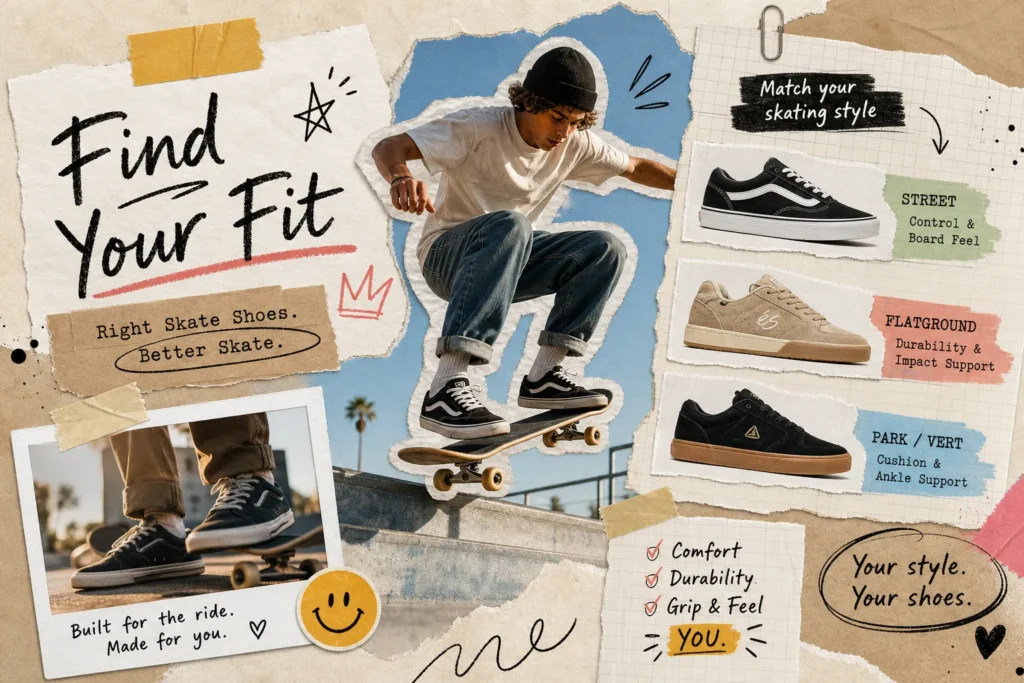
These are the shoes most street skaters and flatground-focused riders prefer. Models like the DC Kalis Vulc and the Vans core skate line lean heavily into this construction. If you skate ledges, flatground, or mini ramps, vulc shoes are typically the better call.
When Cupsole Construction Makes More Sense
Cupsole shoes use a separate, thicker sole unit that wraps up around the shoe’s edge. That extra material adds impact protection and underfoot cushioning, which matters when you’re skating gaps, stairs, or anything that involves hard landings.
The trade-off is less board feel and a longer break-in period. If heel bruising is already a problem, cupsoles are worth the adjustment. The Emerica Pillar Mid is a classic cupsole pick built specifically for skaters who need that extra protection on heavy-impact sessions.
How to Decide Between the Two
Simple rule: skate flatground, mini ramps, or ledges? Go vulcanized. Skate stairs, gaps, or rough transitions with heavy impact? Go cupsole. Beginners can start with either, but vulc shoes are generally easier to learn in because they don’t fight your feet during the learning phase. For a deeper comparison, read Emerica’s take on cupsole vs vulcanized skate shoes.
Materials That Determine How Long Your Skate Sneakers Last
Suede Outlasts Canvas and Most Synthetics
Suede is the most common upper material in quality skate shoes because it handles grip tape friction better than canvas or synthetic mesh. It stretches, breaks in naturally, and doesn’t tear apart at stress points the way lighter fabrics do.
Canvas shoes are cheaper and lighter, but they wear out faster. Under regular skating conditions, suede typically lasts twice as long as canvas. If longevity is a priority, suede-upper shoes are the safer investment every time.
Reinforced Ollie Areas and Toe Protection
The ollie area and toe box take the most abuse from the board. Look for shoes with ollie patches, Duracap-style overlays, or layered suede panels in those zones. These reinforcements can noticeably extend the usable life of a shoe without adding much bulk or weight.
Extra stitching in high-wear zones is also worth checking before you buy. Single-layer construction in the ollie area is a red flag for durability, especially if you’re skating more than a few days a week.
Outsoles and Insoles: Grip and Cushioning
Gum rubber outsoles grip well on both grip tape and smooth surfaces because the compound is softer and more compliant than standard sneaker rubber. The tread pattern matters too. Shallow or worn tread reduces traction quickly, which affects both your skating and your safety. For a technical comparison of sole materials, see this primer on gum rubber vs EVA soles.
Impact insoles made from EVA foam, Ortholite, or gel compounds reduce foot fatigue on long sessions and absorb shock on harder landings. Some shoes come with solid factory insoles; others benefit from an aftermarket upgrade if you’re skating hard several times a week.
Matching Shoe Construction to How You Actually Skate
Street Skating and Flatground
Street skating rewards board feel above everything else. You want to feel the pop, the flick, the landing. Vulcanized shoes with a low-profile sole and flexible upper are the go-to here. The DC Kalis Vulc, Vans Old Skool Skate, and Nike SB Force 58 consistently show up in this category for good reason.
Suede uppers are still preferred for durability even in street setups. Canvas wears too fast for the daily abuse street skating puts on shoes, regardless of how good the construction is otherwise.
Park, Ramps, and Bigger Impacts
When skating parks with larger transitions, bigger gaps, or more vertical, impact protection matters more than raw board feel. Cupsole shoes absorb landings more reliably and reduce the cumulative wear on your knees and heels over long sessions.
Emerica’s lineup, particularly the Pillar Mid, is built with park and impact-heavy skating in mind. Etnies and éS also make solid cupsole options in this range, and both brands have a long track record with skaters who need that extra support without sacrificing too much control.
Beginners and All-Around Skaters
If you’re still figuring out your skating style, a mid-tier vulcanized shoe with decent reinforcement is a good starting point. You don’t need a specialized setup yet. Something with a suede upper, an ollie patch, and a gum sole covers most learning scenarios well without overspending on features you won’t use yet. If you’re brand new, our How to Start Skateboarding: The Ultimate Beginner’s Guide covers equipment, safety, and first steps.
How Skate Shoes Should Fit Before You Buy
Snug Works Differently in Skate Shoes
Skate shoes should fit snugger than regular sneakers. A little extra room sounds comfortable but actually creates problems: your foot slides inside the shoe during tricks, which reduces control and accelerates wear on the interior lining.
That said, “snug” doesn’t mean painful. Your toes should have a small amount of room at the front, and your heel should lock in without slipping. If the heel lifts when you walk, the shoe is too big.
Skate Shoe Sizing Guide: How Fit Varies by Brand
Vans core skate models tend to run true to size but feel snug, especially across the toe box. Some skaters with wider feet go half a size up. New Balance Skate models are generally reported as slightly more generous in width, check the brand’s fit guide or ask your local shop for specifics. Sizing for Emerica and éS can vary more by model than by brand, so checking product-specific fit notes before buying is worth the extra step.
The only reliable way to know is to try them on. That’s exactly why buying at a skate shop in person beats ordering online and guessing at the fit. If you need brand-specific numbers, consult the Vans size guide.
Signs the Fit Is Right
Your foot shouldn’t move around inside the shoe when you’re laced up. The toe cap shouldn’t press into your toes when you’re standing flat. Lacing up should bring the sides of the shoe snugly around your foot without leaving a lot of gap on either side. If the shoe feels like it needs a week of breaking in before it stops hurting, it’s probably the wrong shoe for your foot.
Top Skate Shoe Brands and Where to Find Them
Brands That Have Earned Their Reputation
Emerica, Etnies, éS, and New Balance Skate are four of the most consistently solid skate shoe brands in skateboarding right now. Emerica is known for impact-focused cupsole builds and pro-model quality. Etnies has a long track record in both vulc and cupsole options across a wide price range. éS delivers strong board feel and clean construction. New Balance Skate brings athletic shoe engineering into the skate context, which shows up in the fit, width options, and cushioning quality.
These aren’t brands that survive on marketing alone. They survive because skaters actually use them and keep coming back, which is the only endorsement that means anything. For independent testing and curated lists, see reviews of the best skate shoes and aggregated rankings of the best skate sneakers.
Why Buying in Person at a Skate Shop Matters
Fixion Skate Shop in Twin Lakes, Wisconsin stocks a curated selection of these brands. The staff skates, which means the advice you get is based on firsthand experience with the actual products, not a description pulled from a spec sheet. That’s the difference between walking out with the right shoe and walking out with something that falls apart in a month.
Trying on multiple models side by side, in person, is still the most reliable way to get the fit right. A shoe that looks correct online and fits wrong in real life is a waste of money. Local skate shops exist specifically for this kind of guidance, and that value is real whether you’re buying your first pair or your fifteenth. If you’re overwhelmed by options, our guide So Many Choices: Which To Choose can help narrow things down.
What to Expect to Spend
Many quality skate shoes fall in the $60 to $110 range. Anything significantly cheaper usually cuts corners on construction where it matters most. Anything considerably more expensive is often a lifestyle or fashion model rather than a performance skate shoe, check the construction details before assuming the price reflects skate-specific engineering. You don’t need to spend the most to get a great pair. You just need to spend it on the right shoe.
The Bottom Line on Picking the Best Skate Shoes for Your Style
Skate shoes are a purpose-built product. Understanding vulcanized vs cupsole skate shoes, knowing your skating style, choosing the right materials, and getting the fit right are the decisions that determine whether your shoes last two weeks or six months. None of it is complicated once you know what to look for.
The brands worth buying are out there, and local skate shops like Fixion Skate Shop make finding the right pair significantly easier than guessing online. When the staff actually skates, the advice is worth more than any product page.
Stop buying whatever’s on sale and start buying what fits how you skate. Buy for how you skate. Everything else follows.
Frequently Asked Questions About Skate Shoes
Should I size up for skate shoes?
Generally, no. Skate shoes should fit snugger than regular sneakers to prevent foot movement during tricks. If you’re between sizes, try both before deciding. Some brands, like Vans, run snug in the toe box, so skaters with wider feet sometimes go half a size up.
Vulcanized vs cupsole, which is best for beginners?
Vulcanized shoes are typically the better starting point. They’re lighter, break in faster, and give you more direct board feel as you’re learning foot placement and trick mechanics. Cupsoles make more sense once you’re skating bigger impacts regularly.
How long should skate shoes last?
It depends on how often and how hard you skate. Suede shoes with reinforced ollie areas can last several months of regular skating. Canvas shoes typically wear out much faster under the same conditions. Construction quality and skating frequency are the two biggest factors.
What is a gum rubber outsole?
Gum rubber is a softer, more pliable rubber compound used on skate shoe outsoles. It grips grip tape more effectively than the harder rubber found on most lifestyle sneakers, and it performs well on smooth surfaces like skatepark floors too.
Are skate shoes good for everyday wear?
Yes, most skate shoes are durable enough for daily wear, and many look clean off the board. Just know that skating accelerates wear significantly compared to walking. If you want your skate shoes to last, keeping a dedicated skate pair separate from your everyday pair helps.
What’s the difference between skate shoes and skateboarding shoes sold at big-box retailers?
Skate-branded shoes at general retailers are often lifestyle models built for looks rather than function. They may lack the reinforced ollie zones, gum rubber outsoles, and impact-rated insoles that actual skateboarding shoes include. When in doubt, buy from a dedicated skate shop where the staff can verify what you’re actually getting.